
Quick Answer: Hotels waste significant water through cooling tower evaporation, laundry operations, and landscape irrigationâoften without realizing it. By installing sub-metering systems and applying for sewer credits, hotel facility managers can reduce water costs by 15 to 25 percent while maintaining the guest experience. Most improvements happen in mechanical rooms and back-of-house areas where guests never notice a difference.
The EPA’s commercial water efficiency programs include specific recommendations for hospitality facilities with high water usage.
Why Hotels Are Missing Out on Water Savings
The hospitality industry faces a unique water management challenge that commercial real estate and manufacturing sectors solved years ago. Hotels operate 24/7, maintain occupied buildings with complex mechanical systems, and manage guest comfort as their primary mission. This combination means water usage patterns are distinctâand water management solutions available to other industries haven’t been adapted for hospitality.
A mid-size hotel with 150 rooms typically consumes between 120 and 180 gallons of water per occupied room per day. Compared to commercial office buildings, that consumption is three to four times higher. Yet facility managers often lack visibility into where that water goes and which portions qualify for municipal sewer credits.
The result: hotels overpay sewer charges on water that never reaches the sewer system, and miss opportunities to reduce consumption in areas guests never encounter.
Understanding Hotel Water Usage: Where Your Water Actually Goes
Before implementing monitoring or credit programs, facility managers need to understand hotel water consumption. Most hotels categorize usage into three distinct streams: guest-facing, operational, and building systems.
Cooling Tower Evaporation: Your Largest Opportunity
Cooling towers reject waste heat from chilled water systems that air-condition the hotel. As water circulates through the tower, a portion evaporates and carries heat away from the building. This evaporationâtypically 30 to 50 percent of cooling tower water consumptionânever reaches the sewer. It returns to the atmosphere.
For a 250-room hotel in a warm climate, cooling tower water consumption can reach 40,000 to 60,000 gallons per day during peak season. If 40 percent evaporates, that’s 16,000 to 24,000 gallons per day leaving the system as vapor. Municipal sewer charges still apply to that water on your bill.
Cooling tower creditsâwhich we explain in detail in our plain English guide to sewer creditsâallow you to deduct this evaporative water from your sewer charges, often resulting in refunds from your municipality.
Laundry Operations and Evaporative Loss
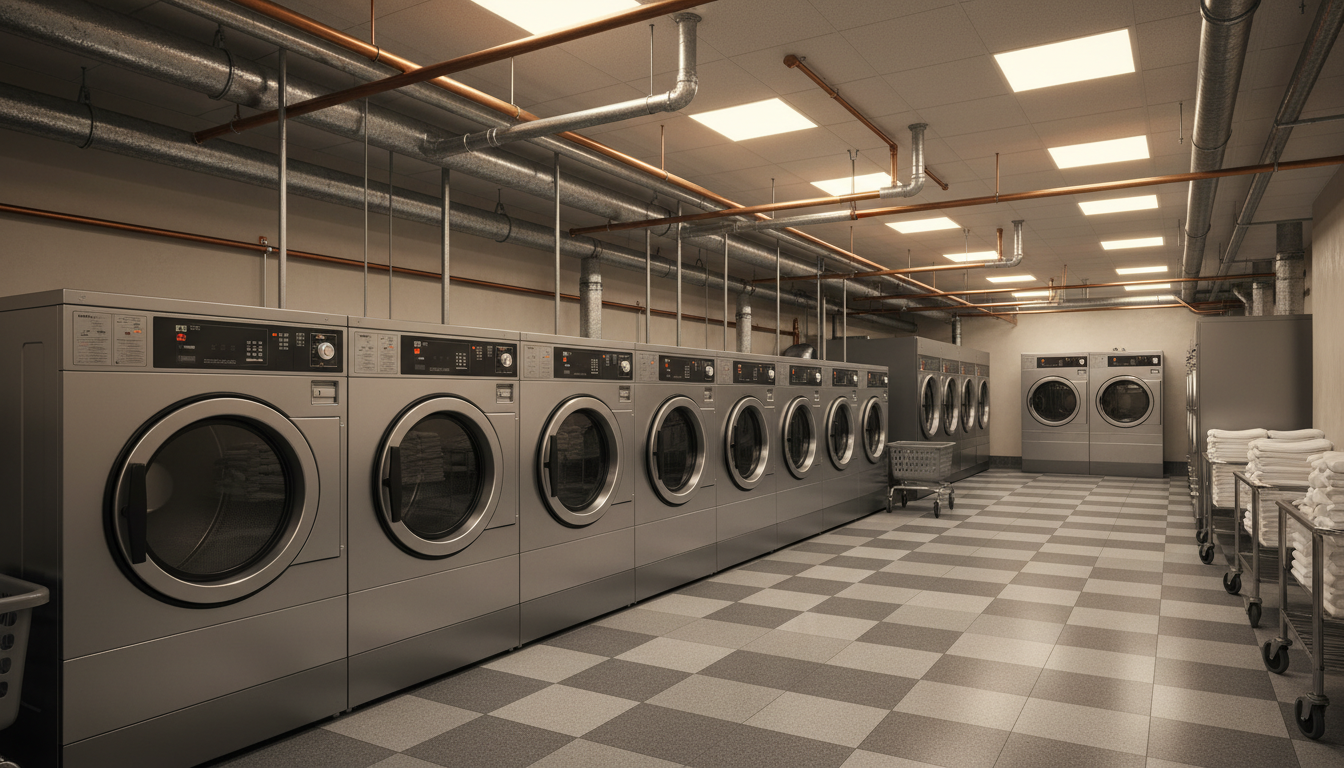
Hotels launder an enormous volume of textiles daily: guest room linens, towels, uniforms, kitchen linens, and restaurant table cloths. A 200-room hotel generates 1,500 to 2,000 pounds of laundry daily. Some facilities manage laundry on-site; others contract with commercial launderers.
In-house laundry operations consume 1,500 to 3,000 gallons per day, with significant water loss through steam and evaporation in dryer exhaust systems. Moisture that leaves as steam or hot exhaust is another non-sewer water stream that still appears on your water bill.
Landscape Irrigation and Pools
Hotel grounds maintenance includes landscape irrigation, fountain operations, and pool water. In dry climates or during summer months, irrigation systems may apply 10,000 to 30,000 gallons per day to grounds. This water either evaporates or absorbs into soilâit does not return to the municipal sewer.
Similarly, pool water loss from evaporation and splash-out during guest use represents another non-sewer water consumption.
Kitchen Exhaust and HVAC Systems
Commercial kitchens in hotels operate continuously. Kitchen hood exhaust systems, dishwashing equipment, and HVAC systems all consume water, with significant portions evaporating through exhaust systems or outdoor ventilation. This water does not flow to the sewer.
How Hotel Water Monitoring Works Without Disrupting Guest Experience
The concern most hotel facility managers voice immediately: won’t water reduction measures force us to compromise guest comfort? The answer is noâbecause the largest water consumption and cost-reduction opportunities exist in back-of-house areas that guests never encounter.
Water monitoring for hotels operates in three phases: measurement, identification, and documentation.
Phase One: Sub-Metering and Baseline Measurement
Water monitoring begins with sub-meteringâinstalling dedicated water meters on specific systems or areas. Rather than reading one main meter for the entire hotel, sub-metering breaks water consumption into discrete streams: guest rooms, cooling towers, laundry, landscaping, kitchen, and building mechanical systems.
Sub-metering provides the visibility required to identify non-sewer water. Most hotels discover that 30 to 50 percent of water consumption is non-sewer water that qualifies for credits or reduction strategies.
Installation typically involves:
- Adding meters to cooling tower makeup water lines
- Metering laundry incoming water separately
- Installing lawn irrigation meters
- Measuring kitchen equipment and hood exhaust water
- Baseline readings over 30 to 90 days to establish consumption patterns
For most hotels, sub-metering installation takes one to two weeks and requires minimal guest area disruptionâmost work occurs in mechanical rooms, laundry facilities, and outdoor irrigation control areas.
Phase Two: Identification and Documentation for Credits
With sub-meter data in hand, facility teams document which water streams qualify for sewer credits. Every municipality has different rules for what qualifies as non-sewer water, but common credits include:
- Cooling tower evaporative loss (typically 30 to 50 percent of cooling tower water)
- Landscape irrigation (100 percent of irrigation water)
- Pool evaporation and splash-out (typically 50 to 70 percent of pool water)
- Laundry steam and exhaust loss (if documented separately)
Documentation typically requires:
- 30 to 90 days of sub-meter readings
- Mechanical equipment specifications (cooling tower size, type, efficiency)
- Landscape irrigation system design and zone maps
- Laundry equipment specifications
- Municipal application forms specific to your city or county
This is where many facility managers benefit from external expertise. As we detail in our guide to overpaying for sewer in commercial buildings, municipal paperwork requirements vary significantly, and improper documentation results in denied credits.
Phase Three: Reduction Strategies and Leak Detection
Beyond credits, monitoring enables leak detection in mechanical systemsâthe single fastest way to reduce water costs without guest impact.
A one-eighth inch leak in a cooling tower makeup line, undetected for a year, costs approximately $15,000 in extra water and sewer charges for a mid-size hotel. Sub-metering and regular monitoring catch these leaks within days, not months.
Common hotel mechanical leaks include:
- Cooling tower makeup valve failures (continuous slow leaks)
- Chilled water system leaks in mechanical rooms
- Hot water circulating pump seal failures
- Laundry equipment water line failures
- Kitchen equipment water connections (ice makers, steamers)
Modern hotel water monitoring systems include automated alerts. When sub-meter readings spike unexpectedly or consumption patterns deviate from baseline, facility teams receive notifications within hoursânot weeks.
Real-World Cost Savings for Hotels
Cost savings vary based on hotel size, climate, and current water rates, but ranges are predictable:
Mid-Size Hotels (100 to 150 rooms)
Annual water consumption: 4 to 6 million gallons
Typical non-sewer water: 1.2 to 2 million gallons (30 to 40 percent)
Average cost savings: $18,000 to $35,000 annually through sewer credits alone
Additional savings from leak detection and operational improvements: $5,000 to $12,000 annually
Total typical savings: $23,000 to $47,000 per year
Large Hotels (250+ rooms)
Annual water consumption: 9 to 15 million gallons
Typical non-sewer water: 3 to 6.5 million gallons (30 to 45 percent)
Average cost savings: $45,000 to $95,000 annually through sewer credits
Additional savings from leak detection and operational improvements: $15,000 to $35,000 annually
Total typical savings: $60,000 to $130,000 per year
These figures assume typical municipal water rates of $8 to $12 per 1,000 gallons and sewer rates of $10 to $15 per 1,000 gallons. Hotels in high-cost areas (coastal regions, drought-affected states) often realize savings 20 to 40 percent higher.
Implementation: What the Process Looks Like for Hotel Engineering Teams
Understanding cost potential is one thing; understanding implementation timeline is another. Most hotel facility managers worry about project management overhead. Here’s what a typical implementation timeline looks like:
Weeks One to Two: Assessment and Planning
A water management specialist (either internal or external) walks the facility with facility staff. The team identifies where sub-meters should be installed, reviews mechanical system specifications, and discusses which water streams are most significant. This phase also involves gathering information about current water and sewer rates, municipal credit policies, and any existing metering or monitoring systems.
Time commitment from facility team: 8 to 12 hours spread across two weeks
Weeks Three to Four: Sub-Meter Installation
Installation crews add water meters to the identified systems. Most work occurs in mechanical rooms, laundry facilities, and irrigation control areas. The scope typically includes:
- Running water lines to new meter locations
- Installing meters and flow sensors
- Configuring data logging systems
- Testing all meters for accuracy
For most hotels, this phase involves minimal guest area disruption. Plumbing work concentrates in back-of-house mechanical spaces.
Weeks Five to Twelve: Baseline Measurement
Sub-meters record data continuously for 8 to 12 weeks, capturing seasonal variations (if relevant) and establishing reliable baselines. During this period, facility teams learn which systems consume the most water and when consumption spikes occur. This data also reveals any existing leaks or inefficiencies.
Weeks Thirteen to Sixteen: Credit Documentation and Municipal Application
Using baseline data, the team compiles credit applications. This phase involves:
- Calculating non-sewer water percentages for each system
- Gathering equipment specifications and documentation
- Completing municipal forms specific to your city or water authority
- Submitting applications with supporting data
Municipal review typically takes 4 to 8 weeks. Once approved, credits apply either immediately (for future bills) or retroactively (depending on municipal policy).
Ongoing: Monitoring and Continuous Improvement
After implementation, sub-metering becomes an ongoing tool. Facility managers review consumption reports monthly, watch for anomalies, and catch leaks early. Many hotels discover that once staff understands water consumption data, they identify additional operational improvements without external intervention.
Multi-Property Hotel Portfolios and Scale Advantages
Hotel companies managing multiple properties benefit significantly from water management programs because standardized processes and equipment selections create economies of scale.
A hotel company with 15 properties in a single municipality can aggregate water data, negotiate municipal credit policies more effectively, and standardize sub-metering equipment across all properties. The result: implementation costs per property drop 20 to 30 percent through volume purchasing and centralized expertise.
Portfolio-level benefits also include:
- Centralized monitoring dashboards: Corporate real estate teams see water consumption across all properties in real time
- Benchmarking across properties: Teams identify which properties perform best and share operational practices company-wide
- Standardized maintenance protocols: Once one property identifies a common leak or efficiency issue, all properties can address it proactively
- Negotiation leverage: Large hotel companies can negotiate better municipal credit policies or water rates when data demonstrates company-wide commitment to conservation
For detailed guidance on managing water across multiple commercial properties, see our comprehensive guide to water management in commercial buildings.
The Hospitality Water Management Opportunity
The hospitality industry is uniquely positioned to benefit from water management programs that other commercial sectors perfected years ago. Hotels have higher per-unit water consumption than offices, more diverse water streams, and significant non-sewer water that qualifies for creditsâyet few hospitality companies have implemented systematic monitoring programs.
For facility managers and operations directors, the opportunity is straightforward: implement sub-metering and sewer credit programs, capture 15 to 25 percent cost reductions, and require zero changes to guest-facing operations. The work happens behind the scenes in cooling towers, laundry facilities, and mechanical rooms where guests never notice.
Water cost increases trend upward nationwide. The EPA’s WaterSense program and industry bodies like the American Hotel and Lodging Association increasingly emphasize water conservation as part of corporate responsibility and operational efficiency.
Hotels that implement water monitoring today create competitive advantages: lower operating costs, documented conservation practices for sustainability initiatives, and the infrastructure to catch expensive leaks before they impact profit margins.
Next Steps: Getting Your Facility Evaluated
If you manage a hotel or hospitality property and want to understand whether water monitoring and sewer credits apply to your facility, RPM Water Equity Solutions offers a free evaluation with no obligation. During this evaluation, we review your property’s mechanical systems, assess municipal credit eligibility, estimate potential savings, and outline an implementation timeline specific to your facility.
If you would like to find out whether your facility qualifies, RPM offers a free evaluation with no obligation. Get your free evaluation.
Water cost management is not a guest-facing initiativeâit’s an operational efficiency improvement that happens in rooms no guest ever enters. Yet the financial impact is immediate and substantial. For hotel facility managers and operations directors accountable for controlling operating costs, water management represents one of the fastest paths to meaningful annual savings.
Ready to Find Out What You Could Save?
RPM Water Equity Solutions helps commercial facilities recover money lost to sewer billing assumptions. If your building has a cooling tower, chiller, or any system where water doesn’t return to the sewer, you may be overpaying every month.
Request your free assessment today and find out how much you could recover.
