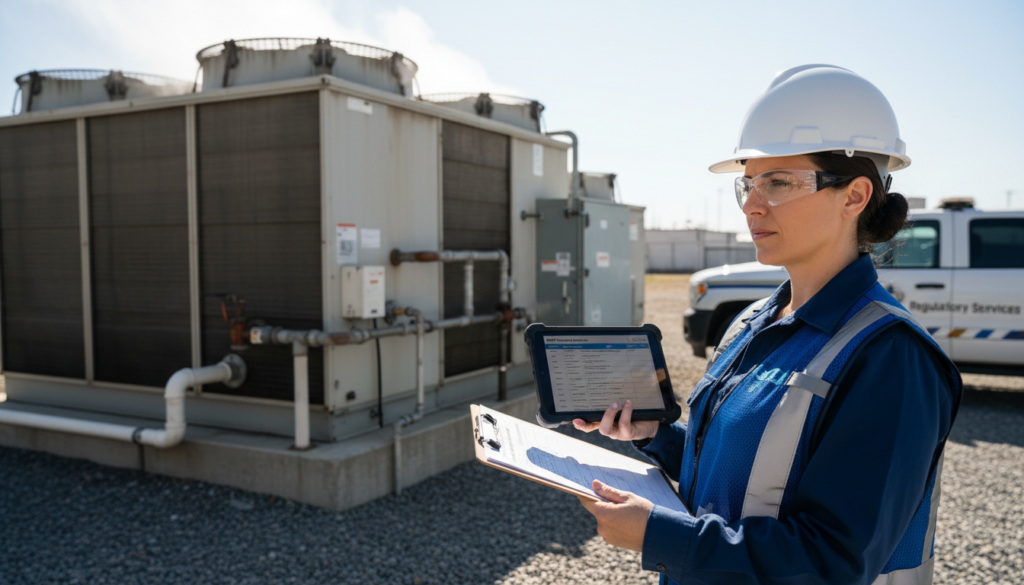
What Is BMP 10 and Does My Cooling Tower Need to Comply?
If you manage a commercial or industrial facility with a cooling tower system, you likely operate under regulations that set water conservation standards. Many jurisdictions require compliance with Best Management Practice 10 (BMP 10), which establishes performance benchmarks for cooling tower operations. Staying compliant protects your facility from penalties, demonstrates water stewardship, and often qualifies you for sewer credits or other incentive programs. This guide walks you through what BMP 10 requires, how to verify compliance, and how a structured monitoring approach turns compliance into competitive advantage.
The full text of the DOE’s Best Management Practice #10 provides the compliance framework for federal and commercial cooling tower operations.
Quick Answer
What is BMP 10? A regulatory framework in many U.S. jurisdictions that sets water conservation targets and operational requirements for cooling tower systems.
Who must comply? Facilities with recirculating or open-loop cooling towers that fall under water conservation mandates in their jurisdiction (often California, Texas, and areas with active water authorities).
Key requirement: Maintain cycles of concentration (CoC) within specified ranges and document water loss, makeup water, and chemical treatment to prove you are meeting BMP targets.
Compliance benefit: Continuous monitoring data supports both regulatory compliance and eligibility for sewer credit programs, which can offset water and sewer bills significantly.
Understanding BMP 10: Definition and Scope
Best Management Practice 10 is a water conservation protocol adopted primarily in California and other water-stressed regions and regional water authorities to reduce the amount of potable water consumed by cooling tower systems. The practice acknowledges that cooling towers account for a significant share of water use in commercial buildings, particularly in regions with hot climates or seasonal cooling demands.
BMP 10 applies most commonly to:
- Recirculating cooling tower systems (the most common type in large buildings)
- Facilities that fall under local or state water conservation mandates
- Properties in water-stressed regions or those receiving water from entities with conservation goals
- Commercial and industrial buildings above a certain size threshold (often 10,000 square feet or facilities using more than 100 gallons per minute)
The specific application of BMP 10 varies by jurisdiction. California’s Department of Water Resources and local water authorities in the state have defined BMP 10 requirements with particular detail. Other states and water districts have adopted similar frameworks. If your facility is in a region subject to water conservation rules, your water authority or municipality will have published guidance on whether and how BMP 10 applies to your cooling tower.
The core principle behind BMP 10 is simple: maximize the efficiency of water use by controlling the chemical concentration in the cooling tower (cycles of concentration) and minimizing unnecessary water loss through blowdown or evaporation. The higher the cycles of concentration, the more cooling capacity you get from the same amount of makeup water.
Key BMP 10 Requirements and Performance Targets
BMP 10 requirements center on measurable performance targets tied to cooling tower water use efficiency. These requirements typically include:
Cycles of Concentration (CoC) Standards
The primary BMP 10 metric is cycles of concentration, which measures how many times the mineral content of your makeup water is concentrated before the tower reaches equilibrium. A higher CoC means you use less makeup water to deliver the same cooling capacity.
BMP 10 typically requires maintaining a minimum CoC of 3.0 for most systems (some jurisdictions allow 2.5 under specific conditions). To reach and maintain 3.0 CoC, you must balance chemical treatment, water quality, blowdown management, and fouling control. This is not a one-time setting; it requires ongoing monitoring and adjustment.
Real-time or frequent measurement of cooling tower water chemistry is essential. Conductivity sensors, which measure total dissolved solids (TDS), provide the quickest way to track CoC and respond to drift.
Water Loss Documentation
Facilities must quantify and document cooling tower water loss through three pathways: evaporation, drift, and blowdown. Evaporation is natural and necessary for cooling to occur. Drift is the unintended escape of aerosol droplets through the cooling tower outlet. Blowdown is the intentional discharge of concentrated water to control TDS and prevent scale and corrosion.
BMP 10 compliance requires baseline data on these losses and proof that you are operating within acceptable ranges. Excessive drift (more than 0.2% of water circulation rate per many standards) signals a maintenance or equipment issue. Uncontrolled blowdown wastes water and limits your CoC.
Maintenance and Treatment Protocols
The framework requires documented procedures for chemical water treatment, cooling tower cleaning, and fouling prevention. Many BMP 10 rules specify the use of non-phosphate or low-phosphate treatment chemicals to protect aquatic ecosystems in receiving waters. You must maintain records of treatment chemicals used, application dates, and concentrations.
Cooling tower cleaning and filter inspections are typically mandated on an annual or semi-annual basis to maintain efficiency and reduce biological growth and scale.
The Intersection: BMP 10 Compliance and Sewer Credit Programs
One of the most valuable aspects of BMP 10 compliance is that the same monitoring infrastructure and data you gather to demonstrate regulatory compliance also qualifies your facility for sewer credit programs in many jurisdictions.
A sewer credit program rewards facilities that reduce the volume of water entering the municipal sewer system. Because cooling tower makeup water is typically potable but does not enter the sewer (it evaporates or is discharged to a stormwater system), many water authorities grant credits against your sewer bill based on documented water use that avoids the sewer.
Here’s how the two align:
- BMP 10 requires sub-metering and documentation of cooling tower makeup water. You measure what goes into the system.
- Sewer credits require proof of non-sewer water use. You submit the same data to your water authority to claim a credit.
- Both depend on the same monitoring equipment and records. A certified water sub-meter and real-time monitoring platform serve both purposes.
- Staying ahead on BMP 10 puts you in a stronger position to qualify for and maximize sewer credits. Many programs offer higher credits for facilities demonstrating sustained conservation.
For a deeper understanding of how sewer credits work and their financial impact, see our guide to water credits and sewer credit programs. We also cover sub-metering requirements for sewer credits in detail.
Monitoring and Documentation: Building Your Compliance File
BMP 10 compliance is not a box you check once. It is an ongoing operational commitment supported by continuous data collection and clear documentation.
What You Must Monitor and Document
- Makeup water flow (volume): Total gallons entering the cooling tower system per day, week, or month. Requires a calibrated sub-meter on the supply line.
- Cooling tower water chemistry: Conductivity (TDS), pH, alkalinity, and other parameters depending on your treatment program. Measured daily or in real-time.
- Cycles of concentration: Derived from the ratio of cooling tower water TDS to makeup water TDS. Requires measurement of both streams.
- Blowdown volume: Water discharged from the tower to control TDS. Can be measured with a dedicated meter or estimated from chemical balance calculations.
- Drift losses: Typically estimated using cooling tower design data and manufacturers’ specifications; actual measurement requires drift collectors.
- Evaporation losses: Calculated from cooling load, entering and leaving water temperature, and psychrometric data.
- Maintenance records: Dates of chemical application, cleaning, filter changes, inspections, and any repairs or adjustments.
- Weather data: Ambient temperature and humidity can affect cooling tower performance and water loss, so correlation helps explain variations in your data.
Regulators and auditors may request any of this documentation, particularly if a water conservation dispute arises or if you are applying for a credit program.
Choosing a Monitoring Platform
Manual data collection and spreadsheets are insufficient for BMP 10 compliance. An automated, cloud-based water monitoring platform captures real-time data from sensors installed on your makeup water line and cooling tower, archives it, and generates compliance reports on demand. Learn how our monitoring platform automates water data collection and integrates with your facility management systems.
A professional monitoring system should provide:
- Certified water sub-meters (±2% accuracy or better per EPA standards)
- Real-time data transmission and cloud storage
- Automated CoC calculations and alerts when you drift below target ranges
- Dashboard visibility for facility managers and engineers
- Audit-ready reports for regulators and credit program applications
- Integration with sub-metering systems to support sewer credit claims
Common BMP 10 Compliance Gaps and How to Address Them
In our work with facility managers across regions subject to BMP 10, we see recurring compliance challenges. Identifying and closing these gaps keeps you audit-ready and compliant.
Gap 1: No Baseline CoC or Target Definition
Many facilities do not have a documented baseline for their current CoC, nor have they set a compliance target. Without a baseline, you cannot prove you are meeting the 3.0 CoC standard, or identify when you slip below it.
How to close it: Work with a qualified water treatment specialist or engineer to measure your makeup water TDS and cooling tower water TDS over a period of one to two weeks under normal operating conditions. Calculate your average CoC. If it is below 3.0, adjust your blowdown rate or chemical treatment to reach the target. Document this baseline and establish it as your benchmark.
Gap 2: Inconsistent or Absent Water Quality Measurements
Many facilities rely on weekly or monthly lab testing of cooling tower water. This infrequent sampling makes it hard to detect and respond to drift in CoC, fouling, or chemical imbalances.
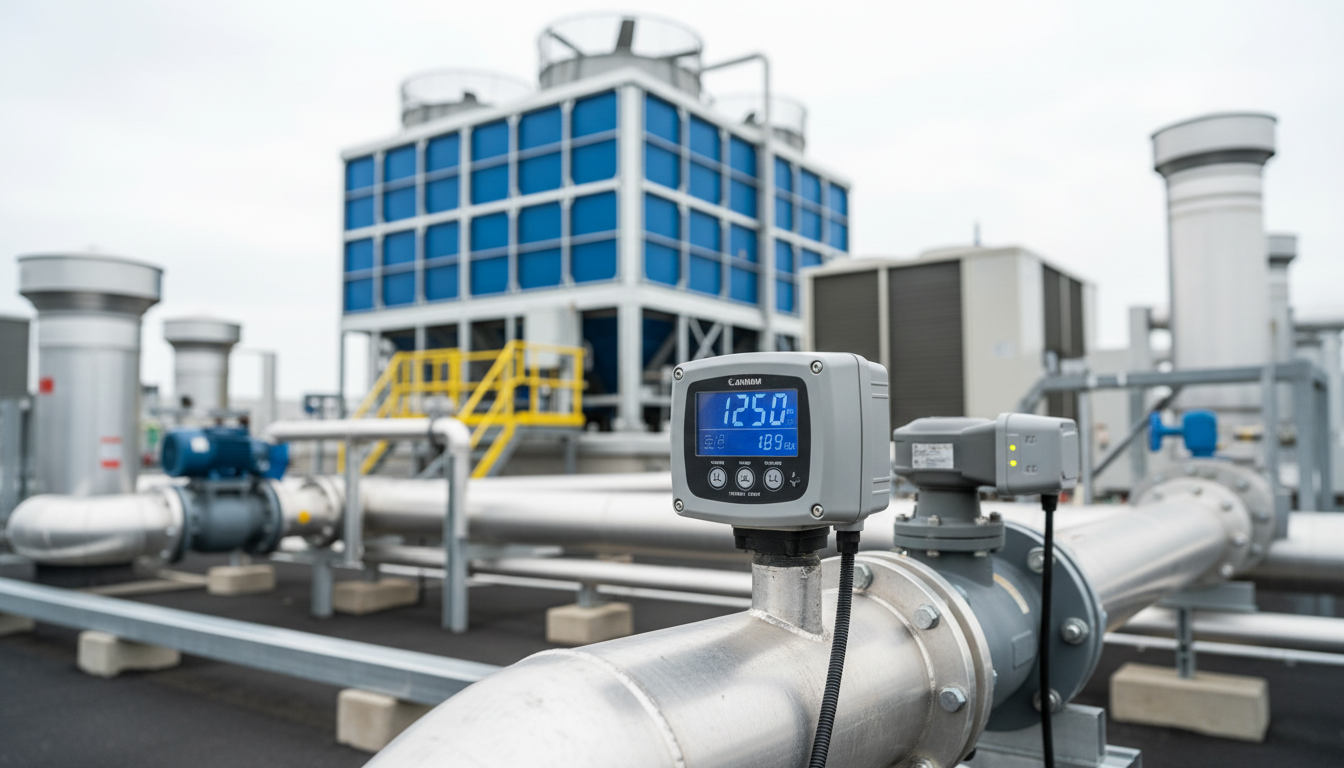
How to close it: Install a real-time conductivity meter on the cooling tower water line or pump discharge. Connect it to a data logger or monitoring platform that records TDS every 15 minutes to one hour. This continuous feed gives you immediate visibility into CoC trends and alerts you when adjustment is needed. Confirm monthly or quarterly with a lab test to validate the sensor.
Gap 3: Makeup Water Measurement is Estimated, Not Metered
If your facility estimates cooling tower makeup water from HVAC system logs or building water meters (which include restrooms, kitchens, and other uses), you cannot claim precise compliance or sewer credits. Estimates are not acceptable to regulators or credit programs.
How to close it: Install a dedicated, certified water sub-meter on the makeup water line supplying the cooling tower. It must meet AWWA M-50 standards (±2% accuracy over the meter’s range). This meter becomes the single source of truth for cooling tower water use and supports both BMP 10 compliance and sewer credit claims.
Gap 4: Incomplete or Lost Maintenance Records
BMP 10 requires documented evidence of cooling tower maintenance, chemical treatment, and inspections. Many facilities lack systematic record-keeping, making it impossible to demonstrate compliance if audited.
How to close it: Create a centralized logbook or digital work order system for all cooling tower work. Record the date, work performed, chemical product names and concentrations, inspector name, and any findings or adjustments. Store records in a format accessible to regulators (PDF or printed hard copy). Cloud-based maintenance management platforms can automate reminders and archival.
Gap 5: No Documentation of Non-Phosphate or Low-Phosphate Chemical Use
Many BMP 10 frameworks restrict phosphate-based cooling tower treatments to protect aquatic ecosystems. Facilities using standard phosphate programs may face regulatory action or inability to claim compliance.
How to close it: Review your current water treatment program with your chemical vendor or treatment specialist. If you are using phosphate-based products, transition to non-phosphate or low-phosphate alternatives that meet your corrosion and fouling control needs. Document the change in your maintenance records and keep product Safety Data Sheets (SDS) on file.
How RPM’s Monitoring Platform Supports Ongoing Compliance
Building a BMP 10 compliance program from scratch can feel daunting, but the right tools and partner make it manageable and cost-effective. RPM Water Equity Solutions provides an integrated approach combining certified sub-metering, real-time monitoring sensors, and audit-ready reporting.
Here is what a professional monitoring platform does for your BMP 10 compliance:
- Captures makeup water volume with certified accuracy. A sub-meter on your supply line records every gallon entering the cooling tower. No estimation, no guessing.
- Tracks cooling tower water chemistry continuously. Conductivity sensors send real-time data to the cloud. You see CoC trends instantly and can adjust before compliance drift occurs.
- Automates CoC calculations. The platform compares makeup water TDS (or conductivity) to cooling tower water TDS and calculates cycles of concentration every 15 minutes. Alerts notify you if you drop below your target.
- Generates audit-ready compliance reports. One click produces a month, quarter, or year summary showing makeup water use, average CoC, maintenance events, and certification that you met BMP 10 targets.
- Supports sewer credit applications. The same sub-metering data and reports qualify you for non-sewer water credits in most jurisdictions, offsetting a portion of your sewer bill.
- Integrates with your facility’s systems. Data syncs with building management systems (BMS) and CMMS platforms so your team works in one place.
Rather than react to compliance audits or credit denials, a proactive monitoring approach puts you in control. You optimize cooling tower performance in real-time, reduce water waste, and demonstrate stewardship to regulators.
The Business Case: BMP 10 Compliance as a Revenue Driver
Compliance may sound like a cost center, but the financial reality is different. Facilities that implement structured BMP 10 programs gain multiple financial benefits:
Avoid Regulatory Penalties
Water authorities in BMP 10 regions conduct audits and investigations when water use is inefficient or documentation is lacking. Non-compliance can result in fines, mandatory retrofits, or even service restrictions in severe cases. A documented, proactive compliance program costs a fraction of potential penalties.
Qualify for Sewer Credit Programs
Many jurisdictions offer sewer credits ranging from 50% to 100% of cooling tower makeup water volume. For a facility using 500,000 gallons per month of cooling tower makeup water, a 75% credit saves approximately $1,500 to $2,500 per month in sewer charges. Annual savings can exceed $25,000 depending on your local rates and the credit structure. The cost to implement sub-metering and monitoring is typically recouped within 12 to 18 months.
Reduce Actual Water and Energy Consumption
Real-time monitoring identifies inefficiencies in real-time. When you see your CoC drifting or blowdown rates creeping up, you can investigate the cause (fouling, poor chemical control, treatment system drift) and fix it. Optimized cooling tower operation reduces makeup water demand and lowers your overall water bill. Learn more about cooling tower water loss and how to quantify hidden costs.
Support Sustainability and Corporate Goals
Many organizations have corporate water reduction or ESG targets. Documented BMP 10 compliance and sewer credits provide clear, auditable proof that you are meeting water stewardship commitments. This supports LEED certification efforts, sustainability reporting, and corporate brand positioning.
Taking Action: Next Steps for Your Facility
If your facility operates a cooling tower in a jurisdiction with BMP 10 or similar water conservation mandates, here is a practical roadmap:
- Confirm BMP 10 applicability. Contact your local water authority or municipality to determine if and how BMP 10 applies to your facility. Ask for the specific performance targets, documentation requirements, and any compliance deadlines.
- Establish a baseline. Measure your current makeup water use, cooling tower water chemistry, and estimated CoC. Identify gaps in your current monitoring or documentation.
- Invest in monitoring infrastructure. Install a certified sub-meter on your makeup water line and a real-time conductivity sensor on your cooling tower water line. Connect these to a platform that logs and reports data.
- Systematize maintenance and chemical records. Create a logbook or digital system for tracking all cooling tower work, chemical applications, and inspections. This becomes your compliance evidence.
- Set and communicate targets. Define your CoC goal (typically 3.0 or higher), blowdown rate, and acceptable makeup water volume. Brief your building operations team so they understand the targets and how to monitor them.
- Apply for sewer credits. Once you have three to six months of verified monitoring data, contact your water authority to apply for a sewer credit program. Submit your sub-metering reports and maintenance documentation.
- Review and adjust quarterly. Every three months, review your CoC trends, water use, and any drift from targets. Adjust chemical treatment, cleaning frequency, or blowdown rates as needed.
If your facility qualifies for BMP 10 compliance, water and regulatory requirements will only become more stringent in coming years. Taking a proactive, data-driven approach now positions you to stay ahead of regulations, reduce costs, and demonstrate genuine water stewardship.
Conclusion
BMP 10 and cooling tower compliance represent both a regulatory requirement and an operational opportunity. Facilities that understand the framework, invest in the right monitoring infrastructure, and commit to systematic documentation transform compliance from a burden into a source of competitive advantage. Continuous data on water use, chemistry, and efficiency not only keeps you audit-ready but also qualifies you for sewer credits, reduces operational waste, and supports corporate sustainability goals.
The path to compliance starts with visibility. If you do not currently have real-time monitoring of your cooling tower makeup water and chemistry, now is the time to implement it. Your water authority, your budget, and your corporate ESG objectives all benefit.
Ready to Assess Your Compliance Status?
If you would like to find out whether your facility qualifies for BMP 10 compliance requirements and sewer credit programs, RPM offers a free evaluation with no obligation. Get your free evaluation today. Our engineers will review your cooling tower system, current water use, and local regulations to identify compliance gaps and opportunities for savings.
Learn more:
- Water Credits and Sewer Credit Programs: A Guide for Facility Managers
- The Hidden Cost of Cooling Tower Water Loss
- Sub-Metering and Sewer Credits: The Complete Guide
- How Our Water Monitoring Platform Works
External Resources
Ready to Find Out What You Could Save?
RPM Water Equity Solutions helps commercial facilities recover money lost to sewer billing assumptions. If your building has a cooling tower, chiller, or any system where water doesn’t return to the sewer, you may be overpaying every month.
Request your free assessment today and find out how much you could recover.
