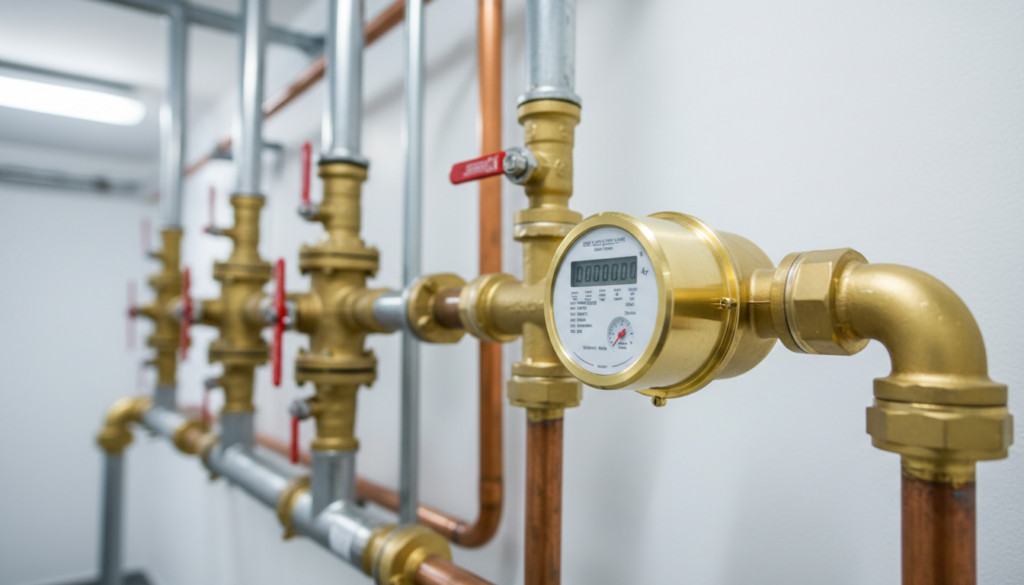
Quick Answer for Busy Professionals
Sewer credits are utility billing adjustments that lower sewer charges by excluding water that can be shown, through proper metering and documentation, to never enter the sanitary sewer system. Many commercial, industrial, and institutional facilities use significant amounts of water that evaporate, are consumed by processes, or are diverted to irrigation and other non-sewer uses, yet are still billed as if all water becomes wastewater. When applied correctly, sewer credits align sewer fees with actual wastewater volumes, often producing recurring cost savings, improving budget accuracy, and delivering a fast return on relatively modest metering and administrative effort.
Introduction
Most utilities calculate sewer charges based on total potable water delivered, using a simple assumption that every gallon coming into a facility leaves as wastewater. For many facilities, that assumption breaks down quickly. Cooling towers evaporate large volumes of water, industrial processes consume water that never returns to the sewer, and irrigation sends water directly into the ground. When these realities are ignored, organizations routinely overpay for sewer service that was never provided. Sewer credits matter because they correct this structural mismatch. By aligning sewer billing with actual wastewater flow, sewer credits reduce unnecessary operating costs, improve budget accuracy, and ensure facilities are charged fairly based on how water is truly used, not how it is assumed to be used.
If you suspect your facility is affected, our breakdown of how much commercial buildings overpay for sewer puts real numbers behind the problem.
What Is a Sewer Credit?
A sewer credit (also called an evaporation or deduct water credit) allows utilities to exclude verified non‑sewer water from sewer billing. Typical qualifying systems include cooling towers, boilers, irrigation systems, and industrial processes.
To understand the specific mechanism behind these adjustments, read our guide on how evaporation credits work for commercial facilities.
Why Sewer Credits Matter
Lower operating expenses: Sewer credits reduce recurring utility costs by ensuring you only pay sewer charges on water that actually enters the wastewater system, not on water lost to evaporation, process use, or irrigation.
More accurate budgeting and forecasting: When sewer bills reflect true wastewater volumes, finance teams can forecast utility spend with greater confidence and avoid unexplained month-to-month variability.
Fast return on metering investments: The cost of installing or validating submeters is often modest compared to the ongoing sewer savings they unlock, resulting in short payback periods for many facilities.
Potential retroactive savings: Many utilities allow credits to be applied to prior billing periods when valid historical data is provided, creating opportunities to recover money already spent, not just reduce future bills.
How Sewer Credits Work
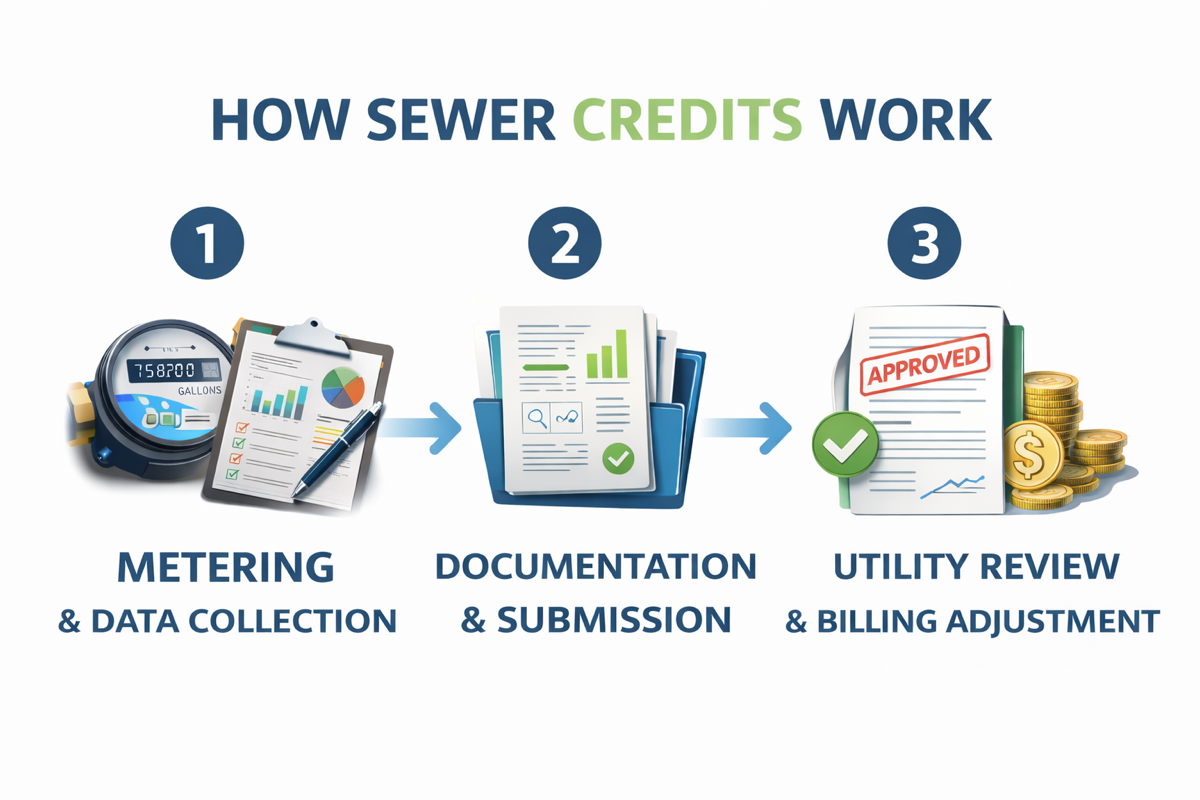
At a high level, sewer credits follow a simple three-step process. First, you measure how water is actually used on site. Next, you document and submit that data in the format the utility requires. Finally, the utility reviews the information and adjusts your sewer billing accordingly. While the details matter, the overall flow is straightforward when approached methodically.
1. Metering and Data Collection
The process starts with accurately measuring how water is used on site. Utilities rely on the primary water meter to determine total consumption and require properly placed submeters to measure water that does not enter the sewer system, such as cooling tower blowdown, evaporative losses, or separately metered irrigation. Accurate meter placement, consistent units, and regular calibration are critical, since these measurements form the basis for any credit calculation.
2. Documentation and Submission
Collected meter data must be organized and submitted in the format required by the utility. This typically includes historical water and sewer bills, meter readings over defined periods, system descriptions or diagrams, and calibration certificates. Clear, complete documentation reduces review cycles and minimizes the risk of delays or rejected applications.
3. Utility Review and Billing Adjustment
The utility reviews the submitted data to confirm that the measured water truly does not enter the sanitary sewer system and that all program requirements have been met. Once approved, sewer credits are applied to future bills and, in many cases, to prior billing periods if the utility allows retroactive adjustments. Ongoing compliance and periodic revalidation may be required to keep the credits in place.
Who Qualifies
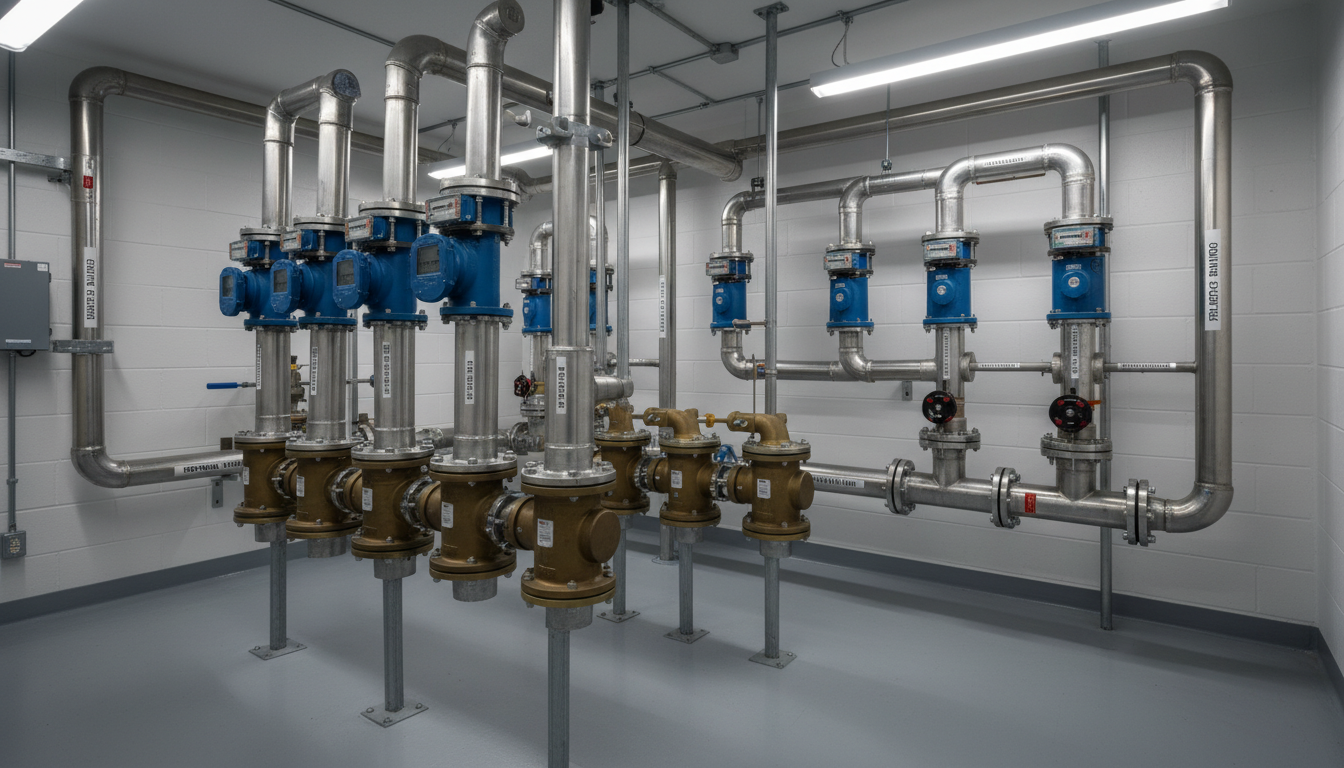
Sewer credits typically apply to commercial and industrial facilities that use water in ways that do not return to the sanitary sewer system and can be measured reliably. Common examples include facilities with cooling towers where large volumes of water are lost to evaporation, steam or boiler systems where water is consumed as part of normal operations, irrigation systems that divert water outdoors, and manufacturing operations that rely on process water that never discharges to sewer. In many cases, these non-sewer uses represent a meaningful share of total water consumption, yet they are still billed as if they were treated wastewater.
Eligibility, however, is not universal or automatic. Sewer credit programs are governed by local utility rules that vary widely by city, county, and utility district. The EPA’s municipal wastewater program provides a federal framework, but implementation details differ at the local level. Requirements can differ on what types of water use qualify, how flows must be metered, how often data must be submitted, whether credits can be applied retroactively, and how long approvals remain valid. A cooling tower credit that is accepted in one jurisdiction may require different meters, documentation, or reporting intervals in another.
This complexity becomes especially challenging for organizations with multiple facilities, or even hundreds of sites, spread across different regions of the United States. In those cases, success depends not just on understanding water usage, but on understanding local sewer regulations at each location. A key part of our service is navigating that regulatory landscape on our clients’ behalf. We analyze local utility rules, design site-specific approaches that meet those requirements, and manage the documentation and submission process consistently across portfolios. That turnkey approach allows our clients to capture savings at scale without needing to become experts in water regulations or sewer credit programs themselves.
How to Calculate Savings
At its core, sewer credit savings follow a simple formula, but the real value comes from applying it correctly and consistently.
Adjusted Sewer Volume = Delivered Water – Non-Sewer Water
Savings = Excluded Volume × Sewer Rate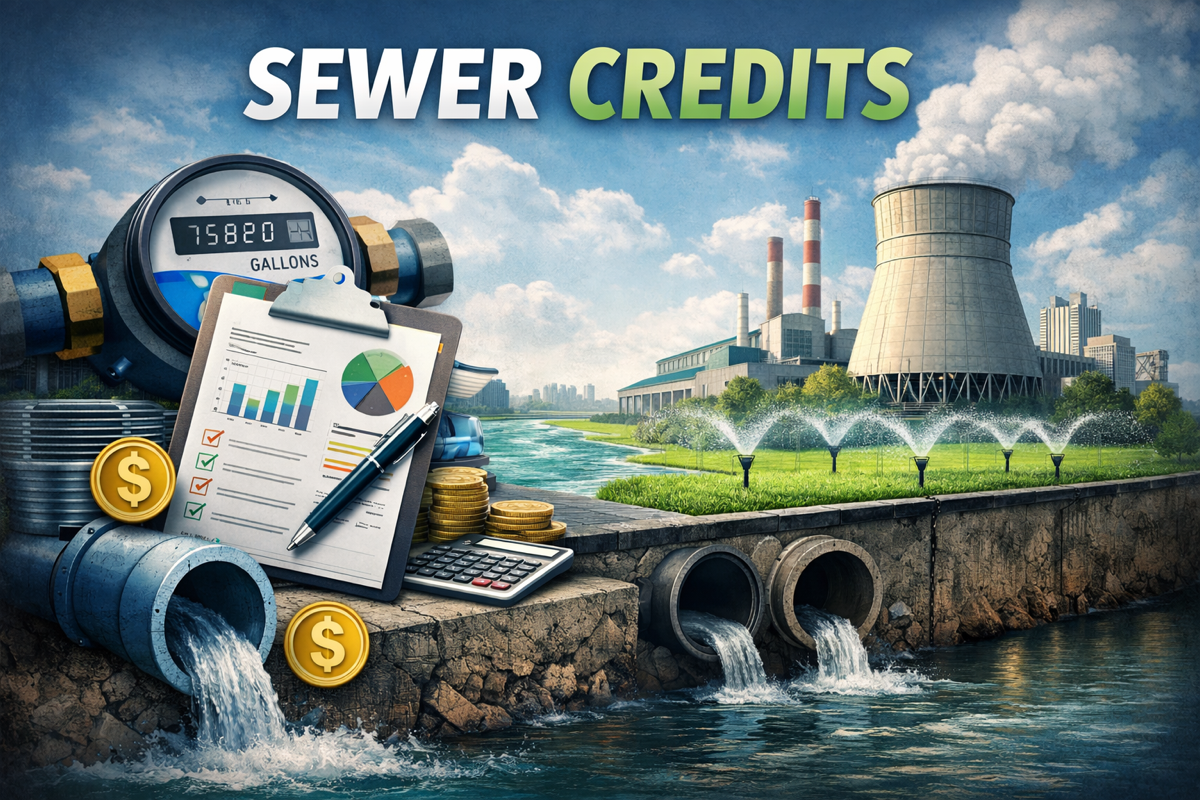
In plain terms, you start with the total amount of water delivered to your facility, subtract the portion that can be shown to never enter the sanitary sewer system, and then apply your local sewer rate to the remaining volume. The water removed from sewer billing represents your savings. For facilities with cooling towers, steam systems, or process water losses, that excluded volume can be substantial and recurring month after month.
While the math itself is straightforward, accurately calculating savings in the real world is rarely that simple. Sewer rates vary by utility and can include tiered pricing, minimum charges, seasonal adjustments, and ancillary fees. Non-sewer water volumes must be measured using properly placed and calibrated meters, reported in the units the utility requires, and documented in a way that meets local program rules. Small errors in assumptions, unit conversions, or reporting periods can materially affect results or delay approval.
We provide a savings calculator to help organizations quickly estimate potential upside and decide whether it makes sense to move forward. Many of our clients use it as a first pass to understand order-of-magnitude opportunity. However, most ultimately choose a turnkey approach because they want confidence, accuracy, and durability, not just a rough estimate.
Our team specializes in translating complex water usage, utility regulations, and billing structures into reliable, defensible sewer credit programs. We handle the analysis, documentation, utility coordination, and ongoing verification so our clients can focus on running their business instead of tracking water regulations, meter rules, and sewer credit requirements. For many organizations, the real value isn’t just the savings itself, but the time and risk avoided by having experts manage the process end to end.
Documentation Required
To support a sewer credit application, utilities typically require a clear and well-organized set of materials that demonstrate how water is used and measured on site. This usually includes at least 12 months of water and sewer utility bills to establish baseline usage, detailed meter logs that show non-sewer flows over time (the USGS Water Science School provides useful background on how wastewater volumes are measured and tracked), current calibration certificates for any customer-owned meters, and basic system diagrams or descriptions that explain where water is consumed, evaporated, or diverted. Having this information prepared upfront significantly improves approval timelines and reduces the risk of delays or rejected submissions.
Conclusion
Sewer credits are a proven and often underutilized way to reduce operating costs when water does not enter the wastewater system. With accurate metering, clear documentation, and an understanding of local utility rules, facilities can unlock meaningful and recurring savings while improving the accuracy of their utility budgets.
Not sure whether this applies to your building? Take the short Water Equity Quiz to see where you stand.
Ready to Find Out What You Could Save?
RPM Water Equity Solutions helps commercial facilities recover money lost to sewer billing assumptions. We handle the analysis, metering, documentation, and utility coordination so you don’t have to. All we need to get started is 12 months of water and sewer bills.
Request your free assessment today and we’ll show you exactly where you stand.
