Quick Answer
In most cases, no — utilities apply sewer credits prospectively from the date your application is approved, not retroactively. Some utilities will adjust 1 to 3 past billing cycles, and a few go further if you can document historical evaporation with engineering estimates, but retroactive refunds are the exception. The better news: going forward, the savings are substantial and fast. A 400-ton cooling tower typically evaporates 80,000 to 120,000 gallons per month in season, which at sewer rates of $8 to $12 per thousand gallons means $640 to $1,440 per month in avoidable charges. Setup costs of $2,000 to $8,000 usually pay back in 2 to 8 months, so the fastest path to recovering value is applying now rather than litigating the past.
Once facility managers realize their building has been paying sewer charges on water that evaporates from a cooling tower, the first question is usually: “Can I get that money back?” It’s a fair question — if you’ve been overpaying for years, the total can be staggering. Here’s what to realistically expect.
The Honest Answer: Usually No — But Going Forward, Yes
Most utilities apply sewer credits prospectively, meaning they start from the date your application is approved going forward. They don’t typically issue retroactive refunds for months or years of past overpayments. The reasoning from the utility’s perspective is straightforward: you didn’t have metering data to prove the non-sewer water use during those prior periods, so there’s no documentation to base a refund on.
That said, some utilities offer limited retroactive adjustments — typically one to three billing cycles back from your application date. A few cities with more progressive programs may go back further if you can provide convincing engineering estimates of historical evaporation. It’s always worth asking, but don’t build your business case around retroactive recovery.
How to Calculate What You’ve Been Losing
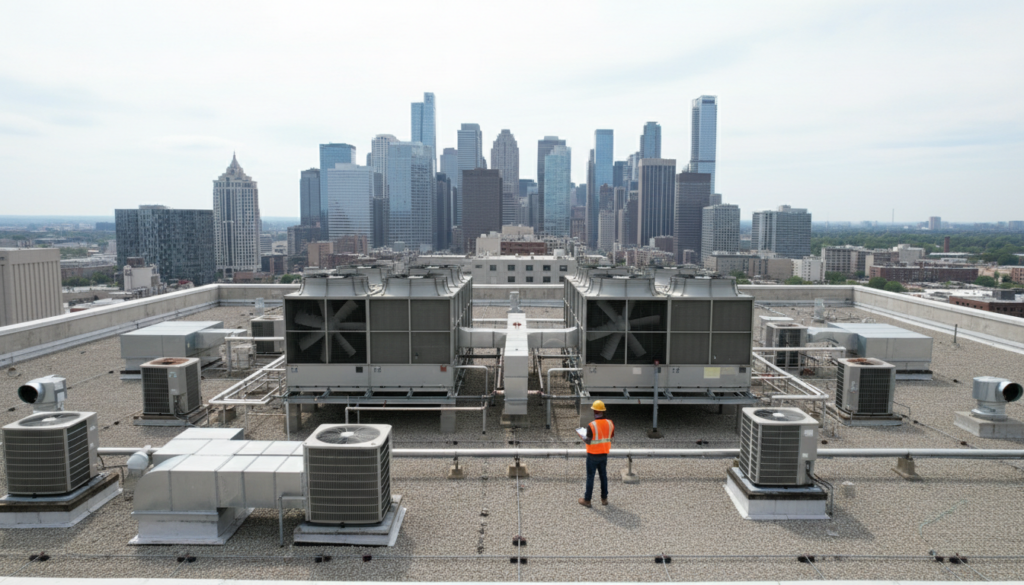
Even if you can’t recover the past, it’s useful to understand the magnitude. A mid-rise office building with a 400-ton cooling tower typically evaporates 80,000 to 120,000 gallons per month during the cooling season. At a sewer rate of $8 to $12 per thousand gallons — rates that the EPA notes have been rising steadily — that’s $640 to $1,440 per month in excess sewer charges. Over five years of inaction, that’s $38,000 to $86,000 that went to the utility for sewer treatment of water that went into the sky.
The lesson isn’t to dwell on what’s lost — it’s to stop the bleeding as quickly as possible.
Why the Payback Period Is So Short
The good news is that even without retroactive refunds, the return on investment for a sewer credit program is remarkably fast. The cost of installing submeters and applying for credits typically runs $2,000 to $8,000, depending on the complexity of your plumbing and your city’s requirements. If your building saves $1,000 per month in sewer charges (a conservative estimate for most cooling tower facilities), the entire investment pays for itself in two to eight months.
Our detailed analysis of water monitoring ROI breaks down these numbers across different building types and sizes. The payback periods are consistently measured in months, not years — making sewer credits one of the fastest-returning capital investments a facility can make.
Why Utilities Resist Retroactive Refunds
Understanding the utility’s position helps you negotiate more effectively. Sewer charges are typically calculated on a simple assumption: every gallon that passes through your domestic water meter eventually reaches the sewer. Without a deduct meter or evaporation submeter in place during past billing periods, there is no measured record of what actually evaporated — only estimates. Utility billing departments are audited, and most are prohibited by tariff or municipal code from issuing adjustments that aren’t backed by meter data.
There’s also a budget reality. Sewer revenue funds treatment plant operations and bond payments, and a large retroactive refund is money the utility has already spent. That’s why even utilities with generous credit programs usually cap look-back adjustments at one to three billing cycles — it’s a bounded, defensible number rather than an open-ended liability.
What to Ask Your Utility Before You Apply
A 15-minute phone call to your utility’s commercial billing department can save weeks of back-and-forth. Ask these questions and write down the answers:
- Does the utility offer any retroactive adjustment, and how many billing cycles back?
- What meter types and accuracy standards are required for an evaporation or deduct meter?
- Is a plumbing permit or utility inspection required before the meter counts toward credits?
- How often must meter readings be submitted — monthly, quarterly, or annually?
- Is there an application fee, and does the credit renew automatically or require annual re-application?
Getting these answers in writing matters. If a billing dispute arises later, a documented statement from the utility about its own policy is far more useful than a recollection of a phone call.
What You Can Do Right Now
If you believe your building has been overpaying, take three immediate steps. First, call your utility and ask specifically whether retroactive credits are available — you might be surprised. Second, request information about their sewer credit application process so you can start the clock on prospective savings. Third, get your cooling tower metered so you have the data you need. The Department of Energy recommends metering as a fundamental best practice for cooling tower management, and the data serves multiple purposes beyond just sewer credits.
For a detailed look at how billing assumptions create these overpayments in the first place, our article on how much you’re overpaying for sewer lays out the math clearly.
Ready to Find Out What You Could Save?
RPM Water Equity Solutions helps commercial facilities recover money lost to sewer billing assumptions. If your building has cooling towers, you may be paying sewer charges on water that never reaches the sewer system.
Request your free assessment today and find out how much you could recover.
Focus on the Future
It’s natural to be frustrated about past overpayments, but the most productive response is to act quickly on future savings. Every month you spend researching whether you can recover the past is another month of new overpayments. The math is simple: the sooner you apply, the sooner the savings start. Don’t let the perfect be the enemy of the good — start your application now and let the ongoing savings accumulate.
