
Quick Answer: Schools and universities operate large, complex water systems with multiple uses: cooling towers for HVAC systems, irrigation across campus grounds, athletic facilities, dining operations, and specialized labs. Many pay sewer charges on water that never enters the sewer system. The same credit programs available to commercial buildings apply to educational institutions, often recovering five to six figures annually for mid-sized campuses. These savings can be redirected to facility maintenance, student programs, or budget relief without operational disruption.
The DOE Office of Energy Efficiency provides resources for institutional buildings, including schools and universities, to reduce water and energy costs.
EPA WaterSense guidance on water efficiency for large facilities applies directly to school and university campuses with cooling infrastructure.
Introduction
Educational facilities operate under different financial pressures than most commercial buildings. Budgets are constrained. Infrastructure is aging. Capital for upgrades is limited. Yet schools and universities are paying the same utility rates as any other institution, without necessarily capturing the cost recovery opportunities available to them.
A typical campus generates water charges from multiple sources. Some water is used, treated, and sent to the sewer system. Other water never touches the sewer system: it evaporates in cooling towers, soaks into athletic fields, or flows out of process equipment. Yet billing departments charge sewer rates on all of it. For a campus with 100 acres, multiple buildings, and centralized mechanical systems, that can mean five or six figures in annual overpayments.
This post explains how schools and universities can recover those costs, how the programs work in practice, and what facility directors need to know to get started.
Why Educational Facilities Overpay on Water and Sewer Bills
Schools and universities have structural characteristics that make them uniquely vulnerable to utility excess sewer charges. They operate multiple large buildings. They maintain campus grounds. They house specialized equipment. And most importantly, they run central mechanical plants that move large volumes of water in ways that municipal billing systems don’t track.
A facility manager at a mid-sized university may oversee a campus of 50 to 100 buildings with 500,000 to 1 million square feet of space. The water systems serving these buildings are interconnected and often decades old. Meter placement, if it exists, may not align with actual water use patterns. A single meter for an entire campus means all water flowing through it gets the same billing treatment, regardless of where it actually goes.
Aging infrastructure compounds the problem. Older cooling towers are less efficient. Irrigation systems leak. Mechanical equipment loses water to evaporation that bills treat as sewer discharge. Because the infrastructure predates modern water conservation standards, no one questions whether the charges are accurate.
Additionally, schools operate on tight fiscal cycles. The focus is on meeting operational needs and managing existing debt, not on detailed utility bill auditing. By the time someone reviews the charges, years of excess sewer charges have accumulated.
Common Sources of Non-Sewer Water on Campus
To understand where excess sewer charges come from, facility managers need to identify how water actually flows through their campus. Most educational facilities have several major water use categories that generate sewer charges but do not require sewer service.
Cooling Towers and Central Mechanical Plants
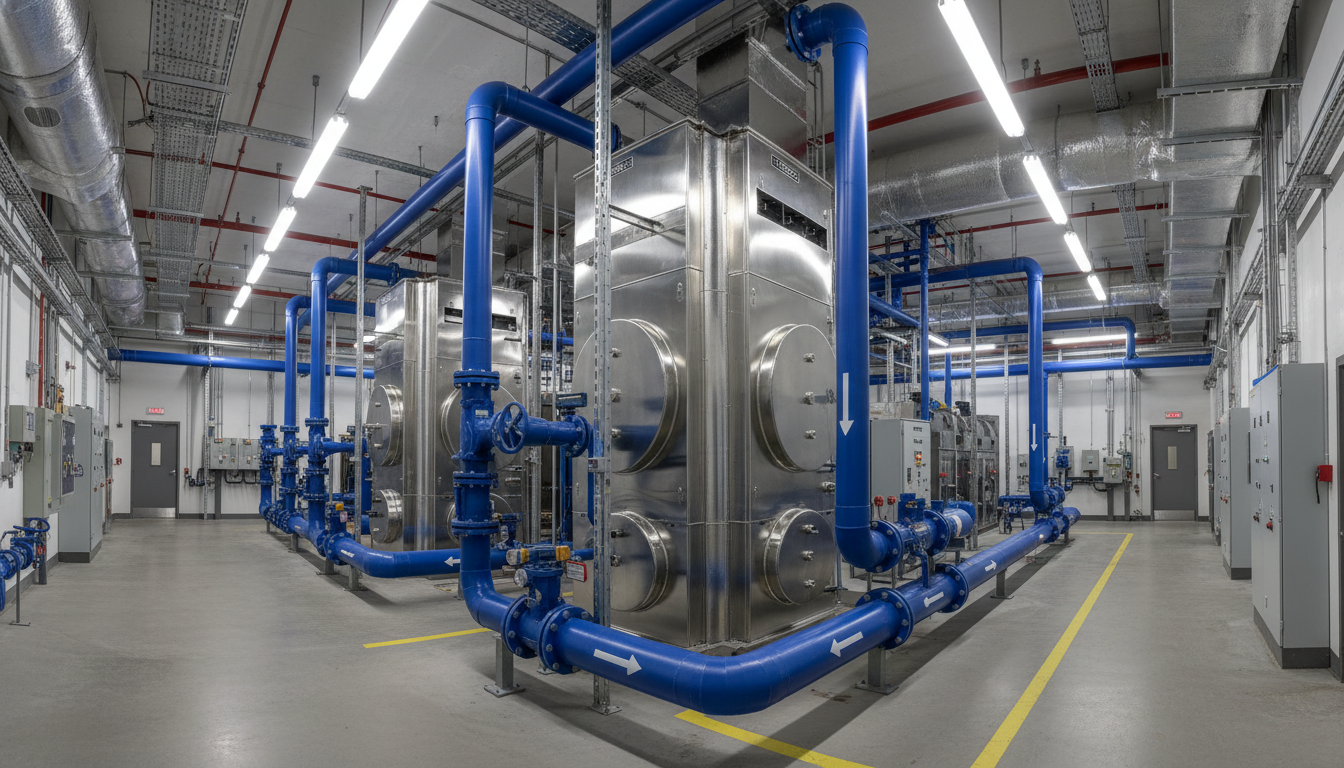
Central cooling systems in large buildings or building complexes use cooling towers to shed heat. Water circulates through the system, loses heat through evaporation, and cycles back. The evaporated water never enters the sewer. Yet municipal billing systems charge sewer fees on the water used to replenish that lost evaporation.
A campus with a central plant serving multiple buildings can move millions of gallons annually through cooling towers. If a campus pays $5 per 1,000 gallons for sewer service on water that evaporates, and a large cooling tower system accounts for 2 million gallons annually, that is a $10,000 annual overcharge. For a district or university, it may be significantly more.
Irrigation Systems and Grounds Maintenance
Most campuses maintain athletic fields, landscaping, and open spaces that require irrigation. Water applied to soil percolates into the ground. It does not flow to the sewer system. Yet it is billed as if it did.
Schools with 30 or more acres of maintained grounds, athletic facilities, and lawns can apply hundreds of thousands of gallons to landscape irrigation annually. A high school with five athletic fields and maintained grounds might irrigate 500,000 to 1 million gallons per season. A university campus could be three to five times that volume.
Athletic Facilities and Pool Operations
Indoor swimming pools, outdoor splash pads, and athletic complexes require water for filling, maintenance, and ongoing operation. Water in a pool evaporates or is discharged during cleaning and maintenance cycles. Some facilities use water for deck wash-down and equipment cleaning. None of this water enters the sewer system in a way that justifies sewer charges.
A single Olympic-sized pool holds 660,000 gallons. Accounting for evaporation, splash-out, and seasonal drain-and-refill cycles, an active pool facility can account for 1 million gallons per year or more in non-sewer water use.
Specialized Equipment and Laboratory Use
Research facilities, medical simulation labs, and other specialized equipment may use water for cooling or processing in ways that do not require sewer discharge. Process water, chilled water loops, and testing equipment are often overlooked in utility audits but account for measurable volumes.
Dining Facilities and Kitchen Operations
Large dining facilities serve hundreds or thousands of students daily. Water used for pre-rinsing dishes, cleaning equipment, and facility sanitation is billed as sewer discharge, but a portion may be used for purposes that do not require sewer service, such as equipment cooling or landscape watering from collected runoff.
How Credit Programs Work for Educational Institutions
The credit programs that recover these excess sewer charges are based on the same principle as those applied to commercial buildings: water that does not enter the sewer system should not be charged sewer fees. Schools and universities access these programs through their municipality or water utility, often with the support of a consultant or specialist firm.
The process begins with a detailed water audit. A specialist reviews the campus water system, identifies where water is used, tracks meter readings, and determines what portion of water use does not require sewer service. This might involve sub-metering, reviewing equipment specifications, calculating evaporation rates for cooling towers, and measuring irrigation application rates.
Once non-sewer water use is quantified, the campus can apply for credits through one or more programs. Most utilities offer evaporation credits for cooling tower water, which are based on industry-standard cooling efficiency factors. Many offer irrigation credits based on documented landscape area and precipitation records. Some offer process water credits for specialized equipment.
We provide detailed explanations of how these credits work in our guides to sewer credits and evaporation credits. For educational institutions, the key difference is scale: a large campus may qualify for credits across multiple use categories, and the cumulative recovery can be substantial.
Credits are typically applied either as a reduction in ongoing bills or as a refund for past charges. Refund periods vary by utility from three to five years, sometimes longer. A campus that processes its first credit application might receive a five-year refund plus corrected ongoing charges going forward.
Budget Impact: Redirecting Utility Savings to Educational Priorities
For school districts and universities operating under budget constraints, water and sewer credit recovery provides tangible financial relief. A mid-sized campus recovering five to six figures annually has meaningful flexibility in how those funds are deployed.
Some institutions use recovered funds to address deferred maintenance. A building with aging plumbing or mechanical equipment can be brought up to code. Others redirect savings into energy efficiency upgrades that further reduce operating costs. Some apply credits to support educational programs or facility improvements that would otherwise require bond funding or capital requests.
The financial benefit extends beyond the immediate year. Once credits are approved and applied to ongoing charges, they reduce utility costs annually going forward. A campus that reduces its annual water and sewer bill by $40,000 or $50,000 creates permanent budget relief. Over a decade, that compounds to $500,000 or more available for other priorities.
Additionally, the audit process that establishes credits often identifies further conservation opportunities. A campus might discover aging cooling tower equipment that, when replaced, would reduce water consumption and operating costs even further. Irrigation systems might be upgraded to smart controllers that cut landscape water use by 20 to 30 percent. The initial credit recovery often catalyzes additional efficiency investments that were previously deferred.
Water Monitoring and Leak Detection for Campus-Wide Systems
Establishing an accurate baseline of water use requires monitoring. Many educational facilities have limited visibility into water consumption across their campuses. A single meter for multiple buildings, or old meters that lack reliable data, means no one knows whether water use patterns are normal or whether leaks are occurring.
Sub-metering is a practical step for most campuses. Installing meters on major water use points — the central mechanical plant, irrigation zones, athletic facilities, and individual large buildingsâprovides the data needed to track actual consumption, identify anomalies, and support credit applications.
Leak detection becomes more efficient with good data. A campus manager who knows the baseline consumption for a dormitory building can spot an unexpected surge that suggests a leak. A mechanical plant operator who tracks cooling tower water consumption can identify when evaporation rates drift above normal, indicating equipment degradation or efficiency loss.
We discuss the financial case for water monitoring in detail in our post on water monitoring ROI. For educational institutions, the ROI is often compelling: a campus with high consumption across multiple buildings and water use categories can justify monitoring systems through leak detection alone, with the added benefit of the data required to support credit applications.
Modern monitoring systems can be installed without operational disruption. Meters are added to existing piping or integrated into upcoming maintenance cycles. Data flows to a dashboard or reporting platform that facility managers review regularly. The infrastructure investment is modest compared to the operational savings and credit recovery it enables.
Getting Started: Water Assessment for Your Campus
The first step is a water system assessment. This does not require a major capital investment or operational changes. An assessment is an audit: a review of your campus water systems, current billing, meter data, and water use patterns to identify where credits might apply and what monitoring would be most valuable.
Facility directors should gather the following information before beginning an assessment: current water and sewer bills from the past three to five years, campus maps showing building locations and major systems, equipment specifications for cooling towers and other major water users, irrigation system designs or descriptions, and any existing meter data.
An assessment specialist will typically walk the campus, interview operations staff, review billing and meter records, and generate a report with findings and recommendations. The report identifies specific credit opportunities, quantifies potential recovery, and outlines next steps for implementation.
Most assessments take four to eight weeks from start to finish and do not disrupt normal operations. Campus staff do not need to make any system changes or modifications during the assessment. The specialist works with existing data and on-site observations.
Addressing Common Concerns: Disruption, Capital, and Coordination
Facility directors often have concerns about implementing credit programs or monitoring systems. Understanding these concerns and how they are addressed can help facility teams move forward with confidence.
Will this disrupt our operations?
No. Credit applications are paperwork and documentation. They do not require changes to water systems or operational procedures. Submitting a credit application involves providing the utility with measurements, calculations, and supporting documentation. Monitoring systems can be installed with minimal disruption and often coincide with routine maintenance.
What capital investment is required?
Credit applications typically require no capital investment. The cost is the assessment itself, usually a few thousand dollars. If the campus decides to install monitoring systems, costs range from modest for basic sub-metering to more substantial for comprehensive monitoring networks. However, the financial recovery from credits typically covers monitoring costs within one to two years.
How do we coordinate across multiple buildings and departments?
A designated point person from facilities management typically leads the process. This individual works with the assessment specialist, coordinates access to buildings and systems, and represents the campus with the utility. For larger campuses, a small working group including building operations, grounds, and administration ensures all areas are represented. The specialist handles the technical work and utilities coordination.
How long does the process take from start to credit approval?
An assessment takes four to eight weeks. Preparing and submitting a credit application takes two to four weeks after the assessment is complete. Utility review and approval typically takes four to twelve weeks depending on complexity and the utility’s workload. A reasonable timeline from initial assessment to first credit adjustment is four to six months. Refunds for past charges, if applicable, may take additional time but often follow within one to two months of credit approval.
Next Steps: Is Your Campus Eligible?
Any school or university with a campus of 20 acres or larger, multiple buildings, cooling towers, irrigation systems, or athletic facilities should consider a water assessment. Schools in areas with high water and sewer rates (typically $5 or more per 1,000 gallons for sewer) see the greatest financial benefit, but even moderately-priced utilities often yield meaningful recovery.
The first step is simple: a conversation with a water equity specialist who can review your campus characteristics, billing history, and current systems to determine what credits might apply. There is no cost or obligation for this evaluation, and the insights alone often provide value to facilities teams.
If you would like to find out whether your facility qualifies, RPM offers a free evaluation with no obligation. Get your free evaluation.
Conclusion
Schools and universities operate water systems with characteristics that make them uniquely vulnerable to overbilling, but also uniquely positioned to benefit from credit recovery programs. A large campus with a cooling tower, irrigation, and athletic facilities is likely paying sewer charges on hundreds of thousands of gallons of non-sewer water annually.
The same credit programs that serve commercial buildings apply to educational institutions. Facility directors can recover five to six figures annually for mid-sized campuses without operational disruption or major capital investment. Those recovered funds address budget constraints, deferred maintenance, and facility priorities that would otherwise consume scarce resources.
The process begins with an assessment, continues through credit application, and results in reduced utility costs that compound year after year. For facility managers and school district CFOs focused on operational efficiency and budget stewardship, water equity credits represent a straightforward opportunity to reallocate significant funds to mission-critical needs.
Contact a water equity specialist to learn what credits might apply to your campus.
Ready to Find Out What You Could Save?
RPM Water Equity Solutions helps commercial facilities recover money lost to sewer billing assumptions. If your building has a cooling tower, chiller, or any system where water doesn’t return to the sewer, you may be overpaying every month.
Request your free assessment today and find out how much you could recover.
