Quick Answer
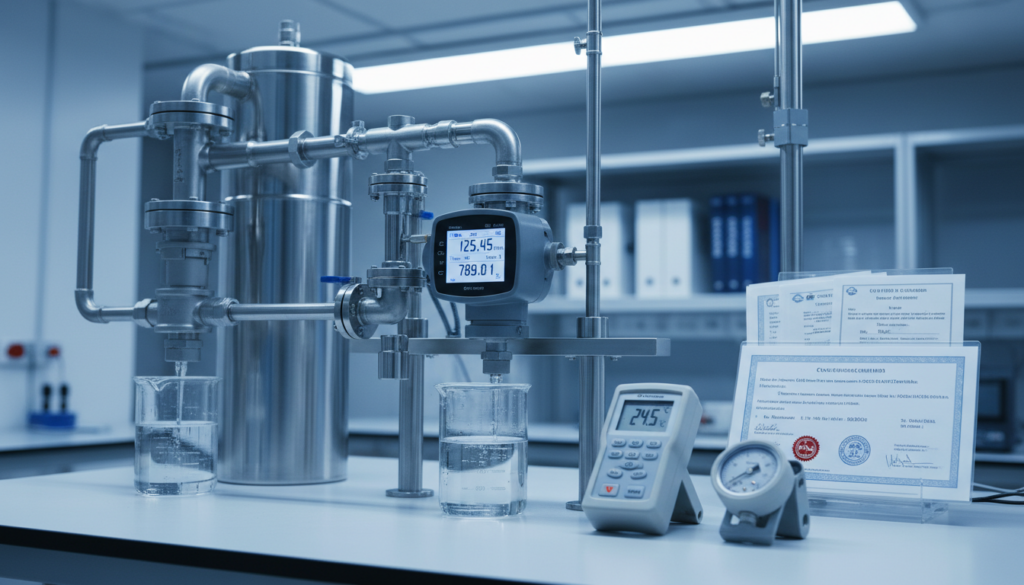
Most utilities expect submeters used for sewer credits to meet AWWA accuracy standards: within plus or minus 2% across the meter’s normal operating range. On a cooling tower using 100,000 gallons a month, that means readings between 98,000 and 102,000 gallons. Some cities accept plus or minus 5%, while a few require NIST-traceable calibration certificates with the application. Modern commercial meters from major manufacturers meet the 2% standard out of the box — the real accuracy risks are improper installation (insufficient straight pipe runs can skew readings 5 to 15%) and wear over time, since aging mechanical meters under-read and quietly shrink your credits. Plan on annual accuracy checks and replacement of mechanical meters every 10 to 15 years.
When your sewer credit application depends on metering data, accuracy matters — both for getting approved and for maximizing your savings. But how accurate do your meters actually need to be? The requirements vary by city, but industry standards and common utility expectations provide a clear target.
The Standard: Plus or Minus 2 Percent
Most utilities that accept submetered data for sewer credit applications expect meters to meet AWWA (American Water Works Association) accuracy standards, which call for plus or minus 2 percent accuracy across the meter’s normal operating range. This means if your cooling tower uses 100,000 gallons in a month, the meter should read between 98,000 and 102,000 gallons.
Some cities are less stringent, accepting meters with plus or minus 5 percent accuracy. A few are more demanding, requiring NIST-traceable calibration certificates as part of the application package. The EPA’s WaterSense program generally references the AWWA standards as the benchmark for commercial water metering accuracy.
In practice, modern commercial water meters from reputable manufacturers (Badger, Neptune, Sensus, McCrometer, and similar) meet or exceed the 2 percent standard out of the box when properly installed. The challenge isn’t buying an accurate meter — it’s keeping it accurate over time and installing it correctly in the first place.
What Causes Meters to Read Inaccurately
The most common cause of meter inaccuracy is improper installation — specifically, not providing sufficient straight pipe runs upstream and downstream of the meter. Most meters require 5 to 10 pipe diameters of straight, unobstructed pipe upstream and 2 to 5 diameters downstream. Elbows, valves, or tees too close to the meter create turbulent flow that distorts readings. A meter installed with a valve immediately upstream might under-read by 5 to 15 percent — significant enough to reduce your sewer credits by thousands of dollars per year.
The second most common issue is meter degradation over time. Mechanical meters with spinning turbines or nutating discs eventually wear, and worn meters typically under-read. An under-reading meter means you’re documenting less water consumption than you’re actually using, which means smaller sewer credits. The U.S. Department of Energy recommends periodic meter verification as part of any ongoing water management program.
Other accuracy factors include air in the line (which can cause over-reading in mechanical meters), water temperature outside the meter’s rated range, and flow rates that fall below the meter’s minimum threshold. A meter sized for a 4-inch pipe but installed on a line that typically flows at rates appropriate for a 2-inch pipe won’t read accurately at those low flows.
How to Maintain Accuracy
Keeping your meters accurate is straightforward but requires attention. Schedule annual meter checks where you compare your submeter readings against a known reference — many real-time monitoring systems can flag accuracy drift automatically by comparing expected consumption patterns against actual readings. If your city requires periodic calibration certificates, establish a schedule with a meter calibration service.
For mechanical meters, plan for replacement every 10 to 15 years, or sooner if accuracy checks show degradation. Electromagnetic and ultrasonic meters last longer — 20 years or more — because they have no moving parts, but they still need periodic verification. When your sewer credit renewal comes due, having documented meter accuracy checks strengthens your application and prevents delays.
Matching the Meter Type to the Accuracy Requirement
Meter technology matters when your city sets a tight accuracy bar. Mechanical meters — turbine and positive displacement designs — meet the 2% standard when new but are the type most prone to drift as internal parts wear. Electromagnetic meters measure flow with no moving parts and typically hold plus or minus 0.5% to 1% accuracy for decades, which is why many engineers specify them for credit documentation on larger lines. Clamp-on ultrasonic meters avoid pipe cutting and typically deliver 1% to 2% accuracy, though they depend on correct transducer placement and pipe-wall condition.
Also check the meter’s low-flow performance, not just its headline accuracy. Cooling tower makeup flow varies enormously — near zero on a mild spring night, full flow on a July afternoon. A meter with an accuracy band that only starts at 10% of maximum flow can silently miss the small overnight flows that add up across a season. The meter’s specification sheet lists its minimum accurate flow rate; compare that against your actual operating range before you buy.
What Utilities Ask For in Practice
Accuracy requirements usually show up in the application paperwork as three concrete items. First, the meter specification: manufacturer, model, size, and the AWWA standard it complies with. Second, installation evidence: many cities require a licensed plumber, a permit, and sometimes an inspection confirming the required straight-pipe runs before credits begin. Third, an ongoing verification commitment — annual self-checks, periodic calibration certificates, or utility access to read and test the meter.
Keep all three in one file from day one: the meter’s spec sheet and purchase record, installation photos showing pipe configuration, the permit and inspection sign-off, and every subsequent accuracy check with its date and result. Utilities process applications faster when the documentation is complete, and that same file is your defense if readings are ever questioned years later.
When Accuracy Disputes Arise
Occasionally, a utility will question your metered data — perhaps because the evaporation rates seem higher than expected or because the numbers don’t reconcile with the city’s main meter reading. If this happens, having documentation of your meter’s installation (photos, specifications, straight-pipe verification), calibration history, and manufacturer’s accuracy certification gives you a solid defense. A properly installed and documented submeter rarely faces sustained accuracy challenges.
Ready to Find Out What You Could Save?
RPM Water Equity Solutions helps commercial facilities recover money lost to sewer billing assumptions. If your building has cooling towers, you may be paying sewer charges on water that never reaches the sewer system.
Request your free assessment today and find out how much you could recover.
Accuracy Equals Money
A meter that reads 5 percent low on a cooling tower using 300,000 gallons per month of makeup water under-reports by 15,000 gallons. At a sewer rate of $8 per thousand gallons, that’s $120 per month in credits you’re not claiming — nearly $1,500 per year. Investing in proper installation, regular accuracy checks, and timely meter replacement ensures you capture every dollar of sewer credits you’ve earned.
